
- Are all cryptocurrencies based on blockchain
- All the cryptocurrencies
- What are all the cryptocurrencies
Do all cryptocurrencies use blockchain
Almost. We have a process that we use to verify assets. Once verified, we create a coin description page like this. The world of crypto now contains many coins and tokens that we feel unable to verify https://tpfu.info/banking/debit-cards/. In those situations, our Dexscan product lists them automatically by taking on-chain data for newly created smart contracts. We do not cover every chain, but at the time of writing we track the top 70 crypto chains, which means that we list more than 97% of all tokens.
Cryptocurrency works through networks of nodes that are constantly communicating with each other to stay updated about the current state of the ledger. With permissionless cryptocurrencies, a node can be operated by anyone, provided they have the necessary technical knowledge, computer hardware and bandwidth.
Crypto market cap matters because it is a useful way to compare different cryptocurrencies. If Coin A has a significantly higher market cap than Coin B, this tells us that Coin A is likely adopted more widely by individuals and businesses and valued higher by the market. On the other hand, it could potentially also be an indication that Coin B is undervalued relative to Coin A.
Are all cryptocurrencies based on blockchain
As in the IBM Food Trust example, suppliers can use blockchain to record the origins of materials that they have purchased. This would allow companies to verify the authenticity of not only their products but also common labels such as “Organic,” “Local,” and “Fair Trade.”
As in the IBM Food Trust example, suppliers can use blockchain to record the origins of materials that they have purchased. This would allow companies to verify the authenticity of not only their products but also common labels such as “Organic,” “Local,” and “Fair Trade.”
The answer is no. Blockchain, the technology underpinning Bitcoin, is more than just a public ledger of transactions. It’s a decentralized database that stores every transaction made on the network and makes it extremely difficult to tamper with any information in the system. All cryptocurrencies use blockchain, but they can also use other technologies such as a centralized ledger or elliptic curve cryptography.
If you have ever spent time in your local Recorder’s Office, you will know that recording property rights is both burdensome and inefficient. Today, a physical deed must be delivered to a government employee at the local recording office, where it is manually entered into the county’s central database and public index. In the case of a property dispute, claims to the property must be reconciled with the public index.
Let’s start with some quick definitions. Blockchain is the technology that enables the existence of cryptocurrency (among other things). Bitcoin is the name of the most recognized cryptocurrency, the one for which blockchain technology, as we currently know it, was created. A cryptocurrency is a medium of exchange such as the US dollar, but is digital and uses cryptographic techniques and its protocol to verify the transfer of funds and control the creation of monetary units.
Cryptocurrency and blockchain are two distinct technologies that complement each other. The blockchain serves as the underlying technology that supports the cryptocurrency network, recording all transactions and creating new blocks to record successful ones.
All the cryptocurrencies
NFTs, or non-fungible tokens, represent ownership of a unique digital file, often used for digital art, collectables, or other virtual assets. While NFTs share similarities with cryptocurrencies, such as being traded on similar marketplaces, they are not considered cryptocurrencies due to their non-fungible nature. You can read more about it in this article we wrote:
At the time of writing, we estimate that there are more than 2 million pairs being traded, made up of coins, tokens and projects in the global coin market. As mentioned above, we have a due diligence process that we apply to new coins before they are listed. This process controls how many of the cryptocurrencies from the global market are represented on our site.
A cryptocurrency is a digital or virtual currency that uses cryptography for security and operates on a decentralized blockchain network. It enables peer-to-peer transactions without intermediaries like banks or governments. Examples include Bitcoin and Ethereum.
The abundance of cryptocurrencies and tokens is primarily due to the ease of creating tokens using templates and tools. Forking public repositories of existing cryptocurrencies is also very easy. This accessibility allows developers, businesses, and even non-tech-savvy individuals to create unique digital assets tailored to specific use cases, industries, financial solutions, or simply for fun and experimentation. As a result, we see a diverse and growing ecosystem of digital currencies.
What are all the cryptocurrencies
Play-to-earn (P2E) games, also known as GameFi, has emerged as an extremely popular category in the crypto space. It combines non-fungible tokens (NFT), in-game crypto tokens, decentralized finance (DeFi) elements and sometimes even metaverse applications. Players have an opportunity to generate revenue by giving their time (and sometimes capital) and playing these games.
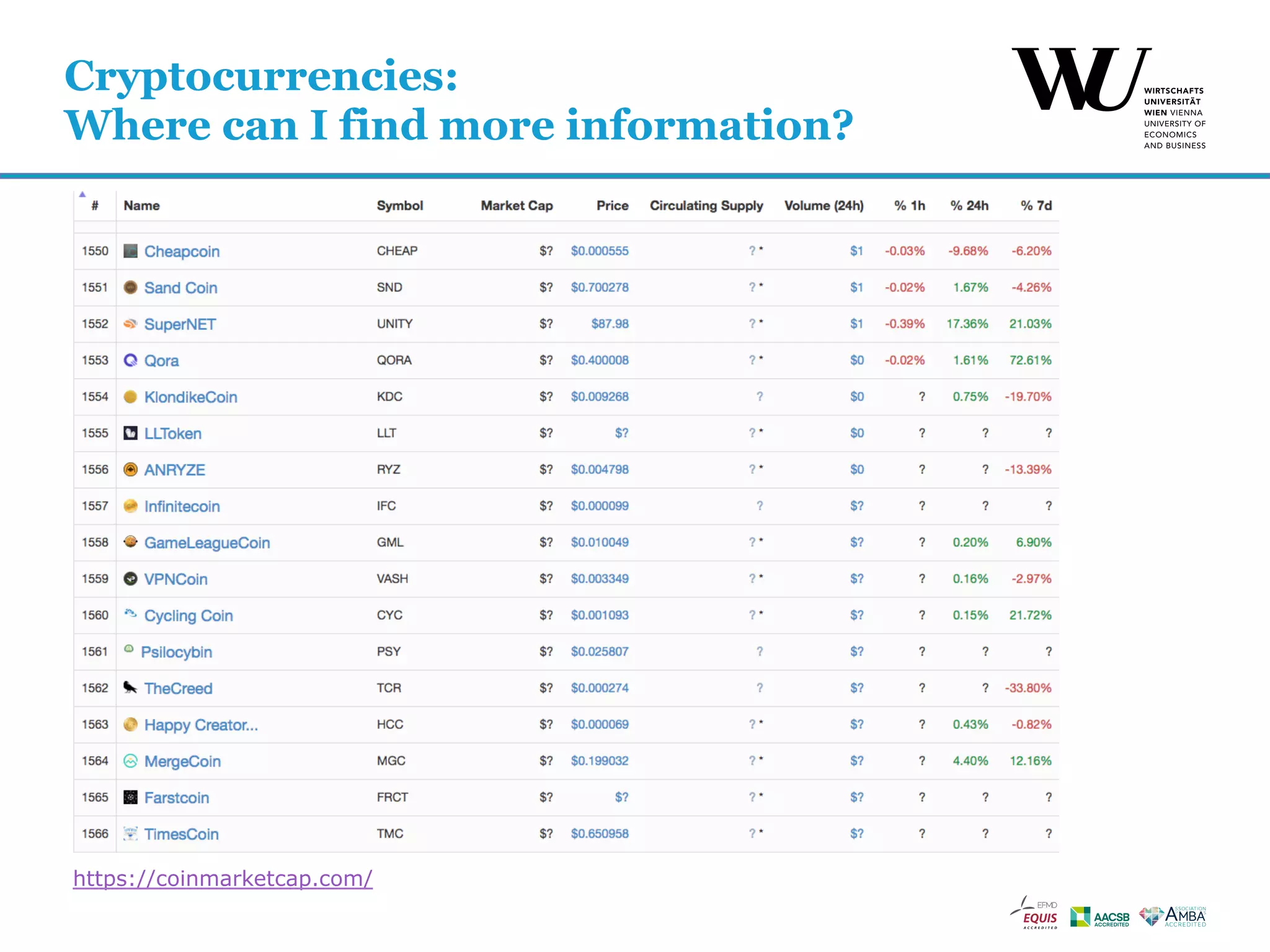
The market cap of bitcoin and other major cryptocurrenciesare are listed below from largest market capitalization to smallest. Cryptocurrencies are also known as coins or virtual currency. The value of bitcoin is growing with time and is the largest currency by market cap currently. The currency data below is updated once every five minutes with the latest market cap data. Exchange rates for the currencies are shown in U.S. dollars. New coins are being brought to market via initial coin offerings frequently so expect the list of cryptocurrencies below to grow.
Welcome to CoinMarketCap.com! This site was founded in May 2013 by Brandon Chez to provide up-to-date cryptocurrency prices, charts and data about the emerging cryptocurrency markets. Since then, the world of blockchain and cryptocurrency has grown exponentially and we are very proud to have grown with it. We take our data very seriously and we do not change our data to fit any narrative: we stand for accurately, timely and unbiased information.
The UK’s Financial Conduct Authority estimated there were over 20,000 different cryptocurrencies by the start of 2023, although many of these were no longer traded and would never grow to a significant size.
Price volatility has long been one of the features of the cryptocurrency market. When asset prices move quickly in either direction and the market itself is relatively thin, it can sometimes be difficult to conduct transactions as might be needed. To overcome this problem, a new type of cryptocurrency tied in value to existing currencies — ranging from the U.S. dollar, other fiats or even other cryptocurrencies — arose. These new cryptocurrency are known as stablecoins, and they can be used for a multitude of purposes due to their stability.